

Knowledge
NDT vs. Levothyroxine: Understanding Your Hypothyroidism Treatment Options
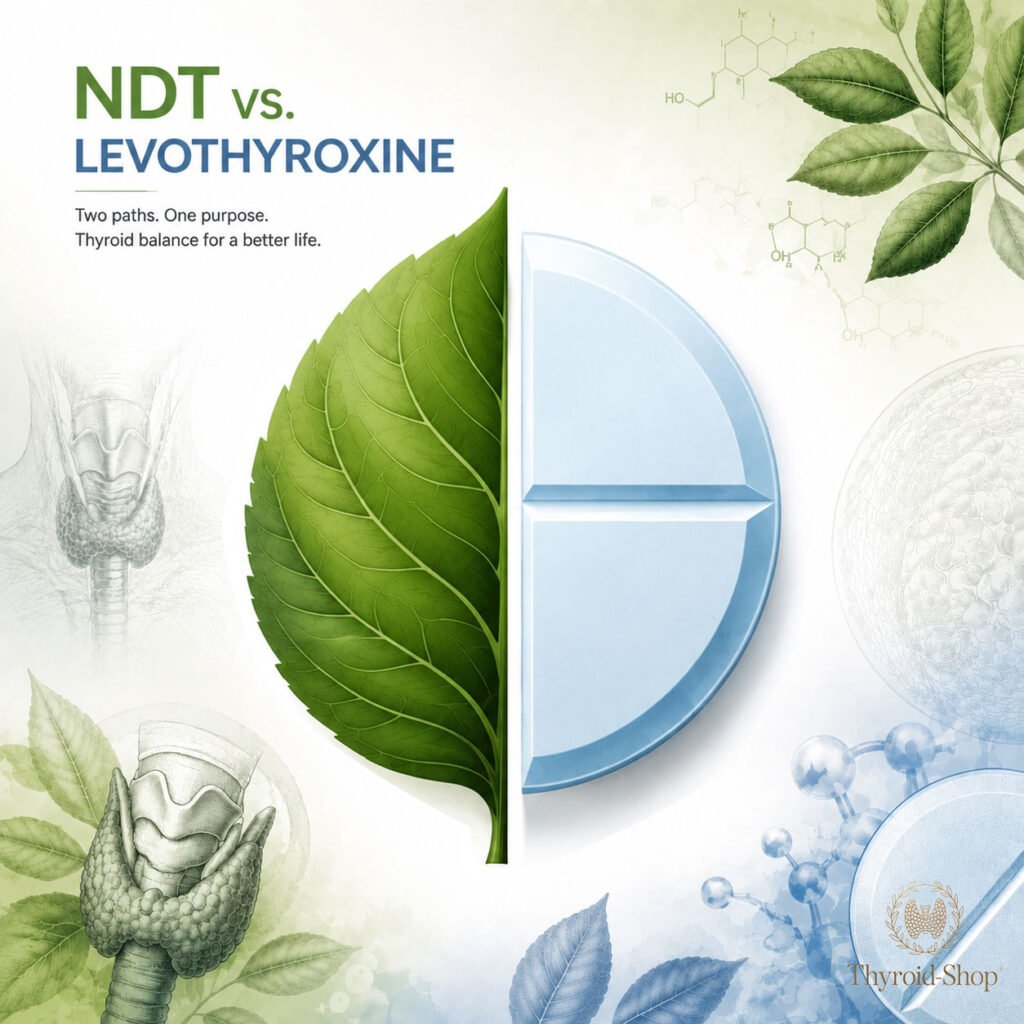
If you have been diagnosed with hypothyroidism, your thyroid gland does not produce enough hormones to keep your body functioning normally. To manage this, thyroid hormone replacement therapy is required.
For decades, the debate on how to best treat hypothyroidism has centered around two main options: Levothyroxine (synthetic T4) and Natural Desiccated Thyroid or NDT (animal-derived T4 and T3). Understanding the differences between these two can help you and your healthcare provider make the best decision for your health.
What is Levothyroxine?
Levothyroxine (often known by brand names like Euthyrox, Eltroxin, or Synthroid) is a synthetic version of thyroxine (T4), which is the primary hormone produced by the human thyroid gland.
Once ingested, your body’s organs and tissues convert this synthetic T4 into the active hormone triiodothyronine (T3), exactly as they would with naturally produced T4.
The Pros:
- Medical Standard: It is the standard of care and the first-line treatment recommended by major medical associations (like the American Thyroid Association).
- Consistency: Because it is synthetically produced, every pill contains a highly accurate and stable dose.
- Gentle Absorption: The body converts T4 to T3 only as needed, which prevents sudden spikes in active hormone levels.
The Cons:
- A subset of patients reports that they still experience hypothyroid symptoms (such as fatigue or brain fog) even when their lab results show normal T4 and TSH levels.
What is Natural Desiccated Thyroid (NDT)?
Natural Desiccated Thyroid (such as Thyroid-S, Armour Thyroid, or Nature-Throid) is derived from the dried thyroid glands of animals, usually pigs (porcine).
Unlike Levothyroxine, NDT contains a combination of hormones: primarily T4 and T3, but also trace amounts of T2, T1, and calcitonin.
The Pros:
- Direct T3 Supply: It provides a direct source of the active T3 hormone, which some patients claim helps resolve lingering hypothyroid symptoms that Levothyroxine could not fix.
- Natural Origin: Some patients prefer it because it comes from a natural biological source rather than being synthesized in a lab.
The Cons:
- Unphysiological Ratio: The ratio of T4 to T3 in pig thyroids is roughly 4:1, whereas the human thyroid produces a ratio of about 14:1. This means NDT gives you a much higher proportion of T3 than your body naturally would.
- Symptom Risks: The rapid absorption of direct T3 can cause temporary hyperthyroid symptoms in some patients, such as heart palpitations, anxiety, or sweating.
- Not the Standard of Care: Due to historical issues with batch consistency and the unphysiological hormone ratio, most endocrinologists do not recommend NDT as a primary treatment.
Side-by-Side Comparison
| Feature | Levothyroxine | NDT (Natural Desiccated Thyroid) |
| Source | Synthetic (Lab-made) | Natural (Animal-derived, usually porcine) |
| Hormones Provided | T4 only | T4, T3, and trace amounts of T2, T1 |
| Medical Endorsement | Standard first-line treatment | Considered an alternative therapy |
| Dose Consistency | Extremely precise and stable | Historically variable, though modern brands are improved |
| Conversion Process | Relies on the body to convert T4 into active T3 | Supplies active T3 directly |
Which One is Right for You?
There is no one-size-fits-all answer. While Levothyroxine is the safest and most reliable starting point for the vast majority of patients, NDT remains an alternative for those whose bodies struggle to properly convert synthetic T4 into T3.
Disclaimer: This article is for informational purposes only and does not constitute medical advice. Thyroid hormone replacement requires careful monitoring through blood tests. Always consult with a licensed endocrinologist or healthcare provider before starting, stopping, or changing your thyroid medication.What is difference between Thyroid-S and Thiroyd from Thailand
